


Universal Jurisdiction under Debate from Latin America: Contributions, Tensions, and Horizons for International Justice
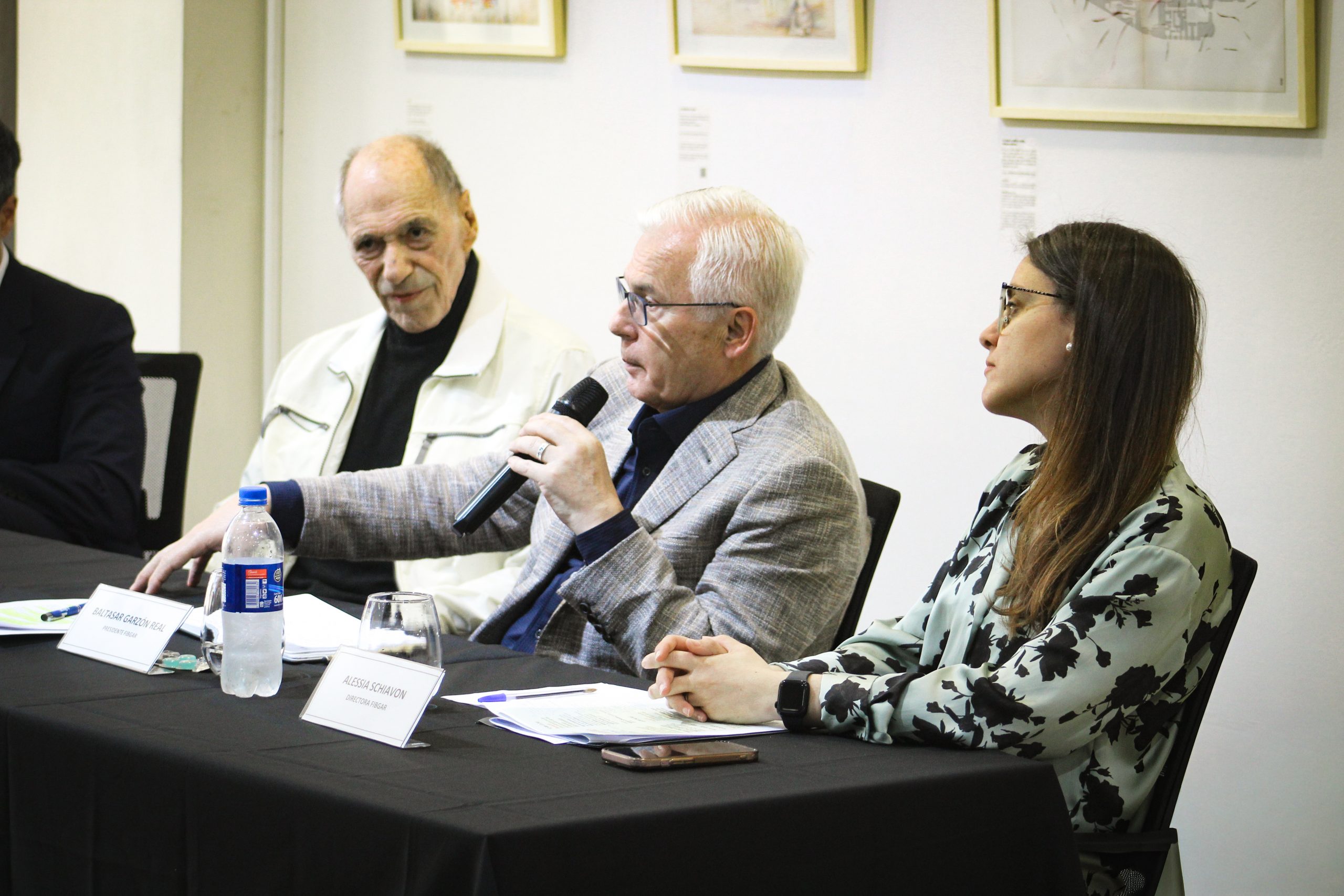
On 26 March, the regional seminar “Universal Jurisdiction: Critical Perspectives from Latin America” took place, organised by FIBGAR with the support of the Instituto Fray Bartolomé de las Casas. The event brought together jurists, academics, and representatives of civil society from Argentina and the region, with the aim of reflecting on the present and future of universal jurisdiction from a Latin American perspective. Throughout the day, a space for in-depth analysis was developed, combining theoretical interventions, practical experiences, and collective dynamics aimed at constructing proposals to address the current challenges of international justice.
The institutional opening was delivered by the Executive Director of IFBC, Lucas Ciarniello Ibáñez, who highlighted the role of such spaces in strengthening regional dialogue and promoting effective tools to address impunity for international crimes. He underlined, in particular, the importance of building networks among legal and social actors in order to sustain and expand accountability mechanisms. This was followed by the Director of FIBGAR, Alessia Schiavon, who focused on the current context, marked by geopolitical tensions, democratic backsliding, and limitations in the effectiveness of international justice. In this regard, she emphasised the need to rethink universal jurisdiction from critical and situated approaches, particularly from the Global South.
Subsequently, the keynote lecture was delivered first by Eugenio Raúl Zaffaroni, who offered an in-depth reflection on the historical and theoretical foundations of universal jurisdiction, addressing its tensions with the principle of State sovereignty and its limitations in contemporary practice. His intervention underscored the risks of political instrumentalisation and the need to preserve its guarantor nature. This was followed by Baltasar Garzón, who revisited these debates from a practical perspective, highlighting the value of universal jurisdiction as an indispensable tool in addressing impunity. He emphasised the need to strengthen international cooperation, as well as to advance in the updating of principles and normative frameworks capable of responding to new forms of criminality.
The first panel, “Critical Perspectives on Universal Jurisdiction”, brought together Eduardo Barcesat, Julieta Mira, Douglas Durán Chavarría, and Alessia Schiavon, who offered a critical and multidimensional view of universal jurisdiction.
Eduardo Barcesat focused his intervention on the tensions between universal jurisdiction and State sovereignty, highlighting the need to avoid restrictive interpretations that limit its application in the face of international crimes. He also underlined its character as an essential legal tool in contexts of structural impunity. Julieta Mira, for her part, addressed universal jurisdiction from a critical perspective, analysing its limits in practice and the inequalities in its global application. In particular, she focused on evidentiary challenges in Argentina and the need to strengthen its legitimacy from the Global South. Douglas Durán Chavarría then reflected on the institutional and political obstacles that condition the effectiveness of this principle, highlighting the importance of international cooperation and strengthening judicial capacities in the region. Finally, Alessia Schiavon situated the debate within the current context, marked by geopolitical tensions and democratic backsliding. She emphasised the need to rethink universal jurisdiction from a critical perspective, incorporating approaches such as gender and the impact of new forms of criminality.
The second panel, entitled “Advances in the Prosecution of International Crimes”, included the participation of Alejo Ramos Padilla, Matías Bailone, and Máximo Castex, who addressed the advances and challenges in prosecuting international crimes from a practical perspective.
Alejo Ramos Padilla focused his presentation on the Argentine judicial experience, highlighting the role of national courts in investigating complex crimes and the importance of sustaining processes of memory, truth, and justice in adverse contexts. Matías Bailone, for his part, analysed the procedural and normative challenges faced by universal jurisdiction, placing emphasis on institutional resistance and the need to strengthen legal frameworks to ensure its effective application. Finally, Máximo Castex provided a perspective from litigation practice, addressing the concrete difficulties in activating these mechanisms and highlighting the importance of innovative legal strategies to advance the prosecution of international crimes.
The third panel, entitled “The Prosecution of Crimes against Humanity and its International Impact: A Driving Force for the Consolidation of Universal Jurisdiction in Argentina”, brought together Ana Oberlin, Pablo Llonto, Miguel Ángel Osorio, and Victoria Montenegro, who addressed the relationship between universal jurisdiction, memory processes, and contemporary human rights challenges.
Ana Oberlin focused her intervention on the importance of judicial processes in the construction of memory and the need to ensure the continuity of investigations in the face of attempts at regression, placing particular emphasis on the need to prosecute crimes committed against historically vulnerable groups, such as women, the LGBTIQ+ community, and children. Pablo Llonto then reflected on the role of civil society and human rights organisations in promoting justice, highlighting their role in the fight against impunity and denialism.Miguel Ángel Osorio, for his part, addressed the institutional challenges faced by judicial systems, focusing on the difficulties in investigating complex crimes and the need to strengthen the capacities of the Public Prosecutor’s Office. Finally, Victoria Montenegro provided a perspective grounded in memory and personal experience, underlining the need to place victims at the centre of processes and the importance of sustaining public policies oriented towards truth, justice, and reparation.
Following a networking session, the day continued with simultaneous thematic working groups organised into three groups. These spaces enabled a deeper exploration of key issues related to the evolution of universal jurisdiction, the challenges posed by democratic backsliding, and the articulation between theory and practice. Among the main topics addressed were the non-applicability of statutes of limitation to international crimes, judicial cooperation, the responsibility of State and non-State actors, the incorporation of a gender perspective, ecocide, and emerging challenges in digital environments.
The day concluded with a general debate aimed at formulating conclusions, in which the need to strengthen regional cooperation, consolidate networks, and advance concrete proposals to improve the effectiveness of universal jurisdiction was highlighted. The seminar thus reaffirmed the importance of this instrument as a key tool in the fight against impunity, while underscoring the need to rethink it from critical, inclusive, and situated perspectives in Latin America.
In a global context marked by increasing challenges for international justice, initiatives such as this contribute to sustaining the debate, generating knowledge, and promoting concrete actions towards truly universal justice.
